AL
AL
 EN
EN
 IT
IT
 ES
ES
 DE
DE
 RU
RU
 EL
EL
 PL
PL
 CS
CS

 Information
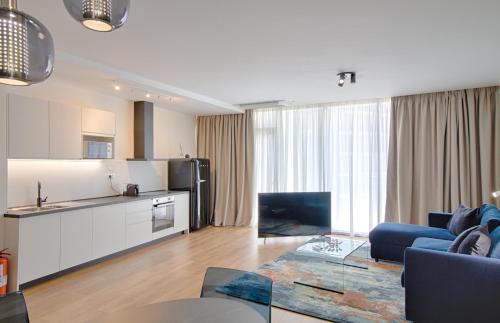
The rental market in Tirana is experiencing a continuous increase in prices, making housing one of the biggest financial challenges for citizens. According to data from real estate agencies, the average rent for an apartment in the capital has reached €721 per month in 2026, a level that is close to the country's average monthly salary.
According to international housing affordability standards, a family or individual should not spend more than 30% of their monthly income on rent. When this percentage is exceeded, it is considered a sign of financial difficulty in covering housing costs.
Data from INSTAT show that the average gross salary in Albania for the first quarter of 2026 reached 90,119 lek, or around €930. This means that an individual must spend approximately 77% of their gross income to pay the average rent in Tirana.
The situation becomes even more challenging when considering the average net salary, estimated at around €740 per month. In this case, the average rent absorbs nearly 97% of monthly income, making housing practically unaffordable for a large part of the population.
For a family of three (two working adults and one child) with an average gross income of around 182,000 lek per month, paying a rent of €721 represents approximately 39% of household income.
When calculated based on net income, the share of rent rises to around 49%, well above the internationally recommended threshold. This shows that even dual-income families are increasingly feeling the pressure of housing costs.
In addition to rent, Albanian families continue to spend a significant portion of their budgets on food. According to recent data, around 40% of monthly household expenses go toward food and non-alcoholic beverages, a figure significantly higher than the European Union average of around 13%.
In 2024, Albanian households spent an average of 93,000 lek per month on consumption, while approximately 36,879 lek were spent on food alone.
Real estate agents report that areas close to the city center remain the most sought-after and, consequently, the most expensive.
Near Dinamo Stadium, rents for one-bedroom apartments range from €500 to €1,000 per month, while in the Artificial Lake area, maximum prices have reached €1,500 per month.
The Komuna e Parisit area and Rruga e Kosovarëve have also seen notable increases, with some one-bedroom apartments including parking reaching up to €900 per month.
Real estate experts argue that one of the main factors driving rent increases is the expansion of the short-term rental market through platforms such as Airbnb.
According to AirDNA data, approximately 5,200 short-term rental units were listed in Tirana during 2025, compared to only around 1,000 units in 2021. Across Albania, the number of apartments available through platforms such as Airbnb, Booking, and Expedia exceeded 26,000 during 2025.
The growing use of apartments for tourism is reducing the supply available for long-term housing, putting additional pressure on rental prices.
According to real estate market experts, rising rents are the result of a combination of several factors:
High demand for housing in Tirana.
Rising apartment sale prices.
Expansion of short-term tourist rentals.
Limited supply of long-term rental properties.
Concentration of investments and employment opportunities in the capital.
The continuous increase in rents in Tirana is creating a growing gap between incomes and living costs. With average rents approaching a worker’s monthly salary, housing is becoming a serious economic challenge for individuals and families. If current trends continue, housing affordability is expected to remain one of the most significant social and economic issues in the coming years.